
I Tried Every Way to Sell My Designer Clothes — Here's What Actually Happened
Before I opened The Wardrobe Witch, I was the woman trying to figure out how to get real money for real pieces. I tried everything. This is what I learned.
There's a moment every woman who owns quality clothing eventually hits.
The blazer that cost $600 is hanging unworn. The bag you loved for two years is sitting on a shelf. The Aviator Nation hoodie that made sense when you bought it doesn't fit your life anymore. And you think someone should have this. Someone should pay me something for it. Right?
So you start googling. And you find the same five options everyone finds. And nobody tells you what actually happens when you use them.
I'm going to tell you. Because I've used all of them.
ThredUp — The One That Feels Easy Until It Isn't
ThredUp sells the dream hard. Order a clean out bag, fill it up, mail it in, get paid. No listing, no negotiating, no post office runs with a toddler. It sounds perfect.
Here's what actually happens.

You fill the bag. You send it. You wait — and I mean wait, sometimes weeks — while they process it. Then you get a notification that out of the 14 pieces you sent, they accepted 6. The other 8 are either being returned to you (for a fee) or donated without your input.
And the 6 they accepted? The payout is where it gets painful. A blouse that retailed for $180 gets you $6. A dress you paid $220 for gets you $11. The algorithm prices everything to move fast on their platform and the margin they keep is significant — we're talking 70-85% of the sale price depending on what the item sells for.
ThredUp makes sense for clearing out fast fashion you just want gone. It does not make sense for anything you actually paid real money for. I learned this the hard way.
Best for: Clearing volume fast when you don't care about the return Not for: Anything worth more than $100 at retail
The RealReal — The Prestige Option With a Catch
The RealReal feels like the grown-up choice. White glove service, authentication team, luxury positioning. You've seen the ads. You've probably considered it.
I sent them pieces. Here's the reality.
Their commission structure means you're keeping between 40-55% of the sale price depending on your seller tier and what the item sells for — and they control the pricing entirely. They will mark your $500 bag at whatever their algorithm decides, which may be significantly less than you'd price it yourself. You have limited ability to contest it.
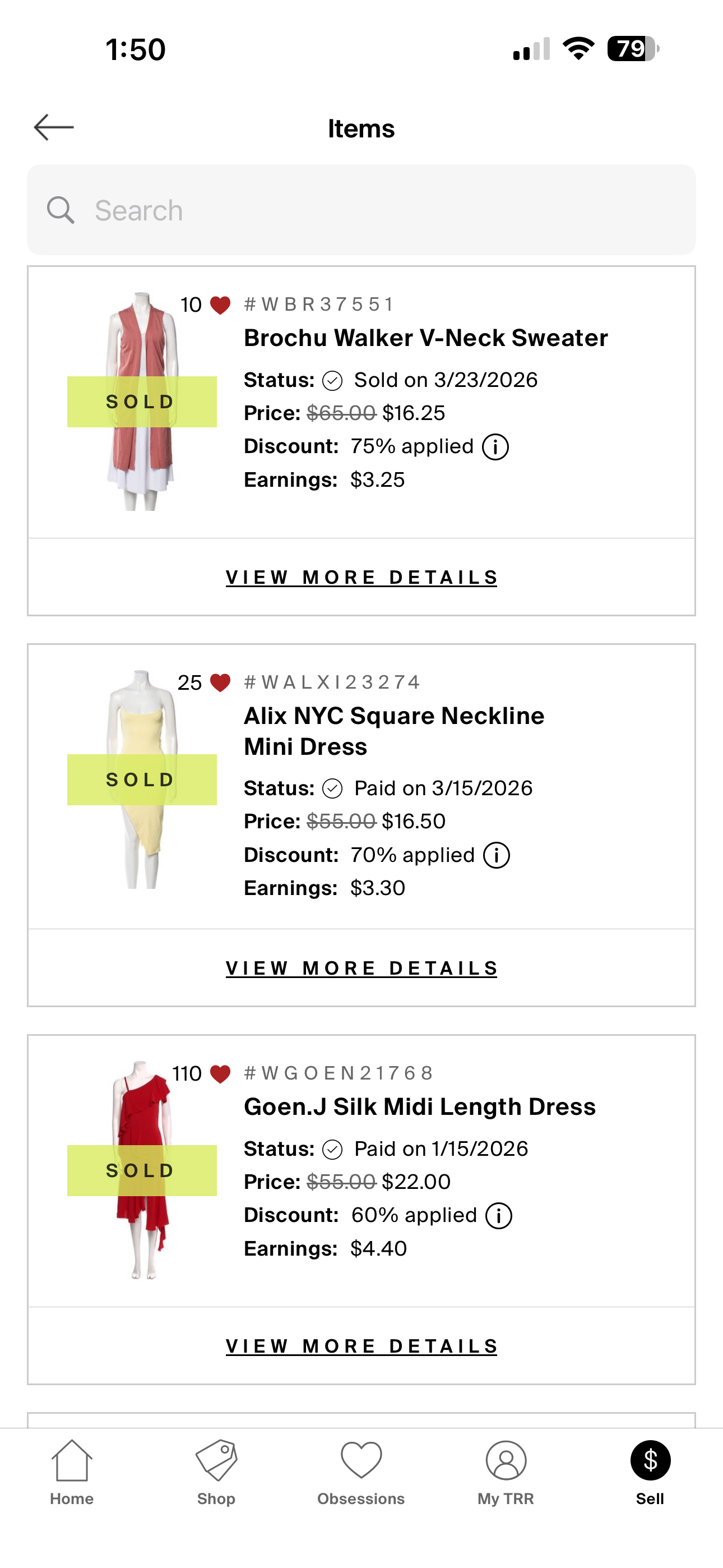
The authentication is real and valuable. The audience is real and valuable. But the wait can be long — pieces can sit for months — and when you finally get paid you sometimes don't recognize the number because you had no visibility into what it sold for and when.
I also want to be honest about the emotional piece of this. You hand over something you loved and it disappears into a warehouse. You get a deposit eventually. It works — but it doesn't feel like your piece was handled with any particular care.
Best for: True luxury pieces — Chanel, LV, Hermès — where the authentication credibility matters and the sale price justifies the commission Not for: Mid-luxury pieces where the commission eats your margin alive
Poshmark — The One That's a Part Time Job
I have sold on Poshmark. I have made real money on Poshmark. I have also spent hours of my life I will never get back on Poshmark.
Here's what nobody tells you about selling on Poshmark yourself: the platform is free but your time is not. You photograph everything — and if you want it to sell, the photos have to be good. You write the listing. You share it constantly because the algorithm rewards active sellers. You field offers that are insultingly low. You negotiate. You pack. You drive to the post office. You repeat.
For one piece this is manageable. For ten pieces this is a weekend. For an entire closet cleanout this is a second job you didn't apply for.
The math can work out well if you're willing to put in the time — Poshmark takes 20% on sales over $15, which is more reasonable than most platforms. But "reasonable commission" only matters if your time is free. Mine isn't. Yours probably isn't either.
Best for: If you enjoy the process, have great photography skills, and have the time to work it consistently Not for: Women who want to move pieces without it becoming a project
Uptown Cheapskate — Fast Cash, Honest Trade-offs
Uptown Cheapskate is a physical resale store that buys your pieces outright — you walk in, they look at what you have, they make you an offer, you walk out with cash or store credit the same day.
I appreciate the honesty of the model. There's no waiting, no algorithm, no mystery. You know exactly what you're getting before you leave the store.
The trade-off is the offer. They're buying wholesale to resell at retail, so the math means you're getting a fraction of what the piece will eventually sell for. Quality pieces that would move at $300 pre-loved might get you $40-60 in a buyout offer. That's not a criticism — that's how a buyout model has to work to be sustainable. But it means you're trading value for speed.
For pieces you just need gone — seasonal items, things that are good but not great, anything where you'd rather have $40 today than $180 in three weeks — Uptown Cheapskate is actually a solid choice. Walk in, walk out, done.
Best for: Volume clearing, speed, pieces that are good but not exceptional Not for: Your best pieces — you'll leave real money on the table
The Wardrobe Witch — Why I Built What I Wished Existed
After going through all of this — the low ThredUp payouts, the RealReal waiting game, the Poshmark time sink, the Uptown buyout offers — I understood something clearly.
There was no option that combined fair pricing, personal handling, fast turnaround, and someone who actually knew what your piece was worth and cared about getting you that number.
That's what I built.
When you consign with The Wardrobe Witch, your piece gets photographed properly, priced based on actual market value, and sold to a buyer who is specifically looking for it. You know what it's listed for. You know when it sells. And your payout reflects what it was actually worth — not what an algorithm decided at 3am.
I authenticate everything personally. I source all over the country and I know the market. The woman buying from me knows the brands and pays accordingly.
It's not the fastest option if fast means "mail a bag and forget it." But if fast means "my piece sold this week to someone who valued it" — it's the fastest option there is.
The piece you're holding is worth something real. The question is whether you want to chase that value yourself, hand it to a platform and hope for the best, or work with someone who already knows what it's worth and has buyers ready for it.
I know which one I'd choose. I tried all the others first.
The Wardrobe Witch accepts consignments from San Diego women looking to responsibly rehome quality designer pieces. Reach out at thewardrobewitch.com to start the conversation.
— The Frequency Files